
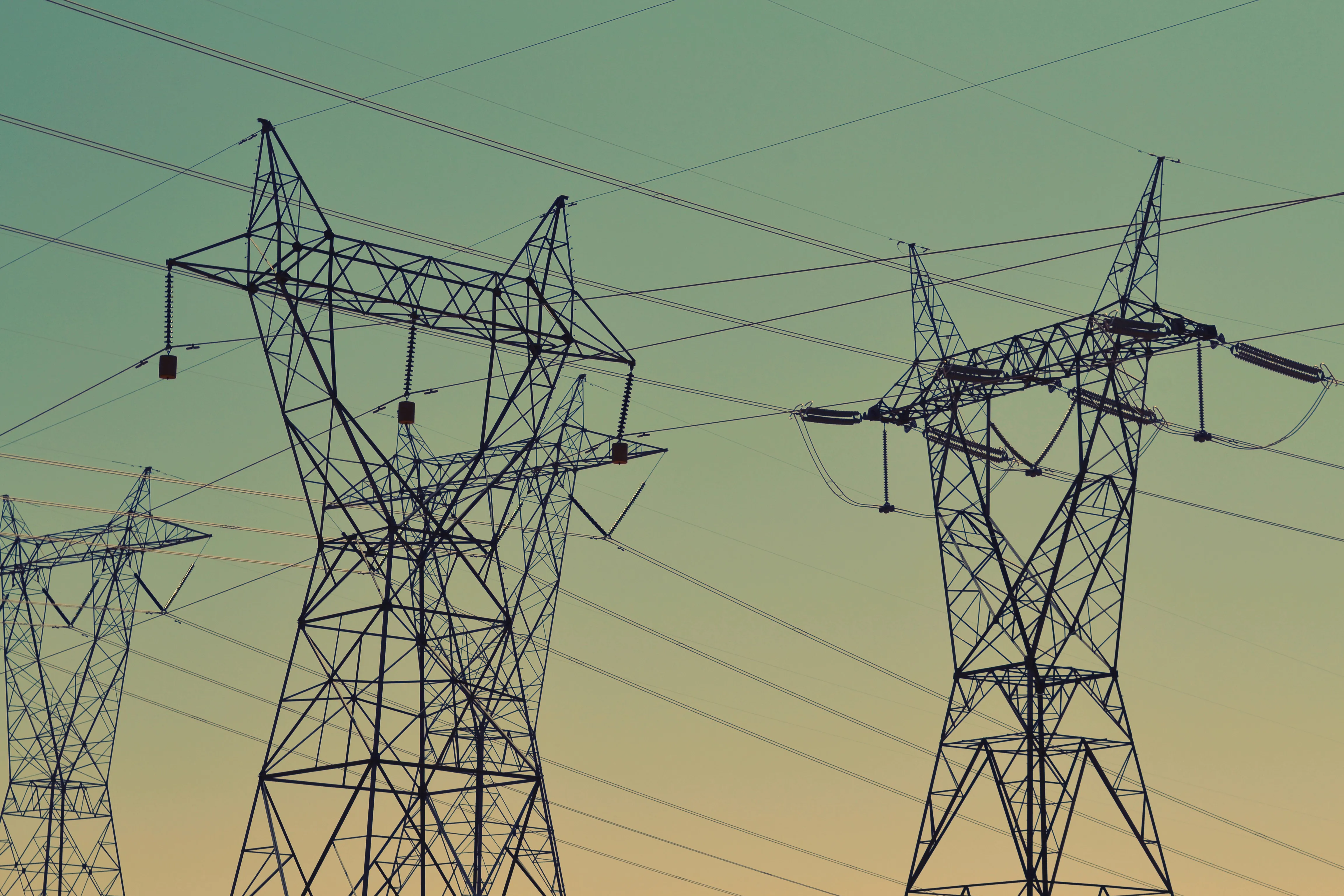

The U.S. power grid is under more strain today than at any point in the last two decades. Data center energy demand in the U.S. is projected to grow from 176 terawatt hours in 2023 to between 325 and 580 TWh by 2028 — and that’s before accounting for broader electrification of transportation and industry. Transmission expansion has lagged behind load growth, and interconnection queues for new generation and storage projects continue to lengthen, increasing the risk of congestion, higher wholesale prices, and reliability challenges during extreme weather events.
Building new transmission lines is part of the answer. But it’s the slow part — permitting alone can take a decade. The faster path runs through the infrastructure that’s already in place.
That’s the logic behind SPARK.
What the Program Is
On March 12, 2026, the U.S. Department of Energy’s Office of Electricity announced approximately $1.9 billion to catalyze electricity infrastructure investments to meet electricity demand growth and resource adequacy requirements, while reducing costs for American households and businesses. The program — Speed to Power through Accelerated Reconductoring and other Key Advanced Transmission Technology Upgrades — is the third round of funding under the Grid Resilience and Innovation Partnerships (GRIP) Program, which was authorized to provide up to $10.5 billion in competitive funding over five years.
The name change from GRIP to SPARK signals something deliberate. The updated emphasis focuses on rapid deployment of reconductoring and other Advanced Transmission Technologies that expand transfer capability, strengthen reliability and resource adequacy, and reduce costs for consumers — all while making use of existing rights of way. Speed and deployability are explicitly prioritized over scope.
The three types of projects DOE is prioritizing are: reconductoring with advanced conductors; Advanced Transmission Technologies (ATTs) that can increase the usable capacity of existing assets in real time; and large-scale, cross-regional transmission upgrades and coordinated planning.
Dynamic Line Rating sits squarely in the second category.
Why DLR Has a Structural Advantage in This Program
Reconductoring projects face a high threshold: projects must achieve a 50% or greater increase in physical transfer capability, while operational or digital upgrades — including DLR — need to demonstrate a 25% or greater improvement. That’s a meaningful distinction. DLR routinely exceeds the 25% threshold in real-world deployments because it operates on actual conductor conditions rather than conservative worst-case assumptions. The capacity gains are real, measurable, and documentable — exactly what a federal application requires.
Beyond the capacity threshold, DOE is evaluating applications across four benefit categories: capacity increase and deliverability, reliability and resource adequacy, affordability and customer benefit, and replicability and scale-up framework. The strongest applications will address all four. DLR-based deployments are well-positioned to do this because the technology generates continuous, field-level data that maps directly to each category — not projections, but measurements from operating lines.
This is where the quality of sensor data becomes a differentiator in the application process. Generic DLR estimates won’t hold up to DOE scrutiny. What moves an application forward is documented performance: conductor temperature readings under real operating conditions, verified capacity gains tied to specific infrastructure, incident detection logs, and deployment timelines that demonstrate the speed-to-value the program is designed to reward.
Understanding the Structure of the Funding
SPARK funding is organized across three topic areas. Topic Area 1, Grid Resilience, supports projects that strengthen reliability and resilience through reconductoring and ATT deployment — eligible applicants include electric grid operators, transmission owners and operators, and distribution providers. Topic Area 2, Smart Grid, supports deployment of advanced grid technologies and is open to for-profit organizations, non-profits, higher education institutions, and state and local government entities. Topic Area 3, Grid Innovation, focuses on large-scale, multi-jurisdictional projects and is open to states, combinations of states, Indian tribes, units of local government, and public utility commissions.
Applicants can submit one concept paper per topic area, which means a utility with the right project structure could pursue multiple pathways through the same program.
Most applicants must provide at least a 50% nonfederal cost share, though qualifying small utilities may be eligible for a reduced 25% threshold. Federal grants cannot be used as cost share, but applicants may combine SPARK funding with private financing, loans, and certain nongrant federal programs, subject to applicable restrictions. This cost share requirement needs to be structured before the full application is submitted — not after.
Several required registrations, including SAM.gov, may take several weeks to process, making early initiation critical. With a concept paper deadline of April 2 and full applications due May 20, the administrative timeline is tighter than the calendar suggests.
What “Speed to Power” Actually Requires from the Technology
The program’s name is a commitment, not just a label. DOE is not funding pilots or exploratory deployments. It is funding utilities that can demonstrate rapid, credible deployment on transmission infrastructure — and then scale it.
SENTRI installs on energized lines with no outage required. The installation process is drone-compatible, which means it can be executed quickly across multiple line segments without the crew logistics and downtime that traditional installations require. This isn’t a footnote — it’s central to what SPARK is looking for. An application that includes a DLR deployment requiring line outages, extended permitting, or multi-year timelines contradicts the program’s core objective.
Beyond deployment speed, SENTRI delivers conductor temperature, mechanical load, sag, and vibration data continuously — the kind of sensor-level measurements that allow operators to document DLR performance with the precision a federal application demands. SENSE 360°, the platform that processes and visualizes this data, gives operations teams the capacity to run line studies, generate reports, and quantify benefit across DOE’s four categories from a single interface.
The Broader Context Utilities Should Understand
Affordability has become a key issue for policymakers. The U.S. Energy Information Administration estimated the national average residential price per kilowatt hour in 2026 at 18 cents, up approximately 37% from 2020. Experts say transmission and distribution costs are a major driver of rising consumer bills.
That context shapes how DOE will evaluate applications. SPARK is not purely a grid modernization program — it is also a consumer cost program. Applications that can show how DLR deployment reduces congestion costs, defers capital investment, or unlocks stranded capacity within existing rights of way are making a direct argument for affordability. That argument lands differently in 2026 than it would have five years ago.
At a time when utilities are beginning a significant grid buildout to meet rising demand from data centers and other sources, investment in grid optimization must be paired with new construction — but optimizing existing assets with technologies like DLR provides near-term value that traditional transmission expansion cannot. SPARK is federal recognition that both paths matter, and that the faster one deserves dedicated funding.
Key Dates
Applications follow a two-stage process:
- Concept paper deadline: April 2, 2026 at 5 p.m. ET — no more than six pages, non-binding, functions as a qualifying round.
- Full application deadline: May 20, 2026 at 5 p.m. ET — submitted by invitation after concept paper review.
- Selection notification: August 2026.
- Anticipated award date: October 2026 – January 2027.
Questions regarding the NOFO can be submitted to DE-FOA-0003580@netl.doe.gov.
Working with Sentrisense on a SPARK Application
Sentrisense has field-deployed SENTRI units on transmission networks across the U.S. and Europe. We have performance data from operating lines, documented capacity gains, and deployment records that directly support the benefit categories DOE requires. If your team is scoping a SPARK concept paper and needs field-validated DLR data or wants to understand how SENTRI fits into your application, reach out. The window is short.
Talk to our team 👉 sentrisense.com
