


Executive Summary
Infraestruturas de Portugal (IP), the national railway infrastructure company, sought to explore new ways to detect cable theft in catenary systems. With theft cases rising across European rail networks, IP tested SENTRI, the monitoring solution by Sentrisense, in a real-life setup on a de-energized railway line. The objective was to assess whether a sensor originally designed for overhead power lines could be adapted for railway infrastructure. The pilot confirmed SENTRI's ability to detect abnormal vibration and tilt, send real-time alerts, and operate reliably in semi-remote environments.
The Challenge
Catenary systems are increasingly targeted by theft, especially in remote or non-operational areas. These incidents result in:
- Costly repairs and service delays
- Limited real-time detection capability
- Exposure to safety risks for inspection crews
- Lack of automated monitoring on non-electrified stretches
Infraestruturas de Portugal needed to test if SENTRI could provide early alerts, reduce detection time, and support theft prevention strategies with minimal deployment effort.
The Sentrisense Solution
What was deployed
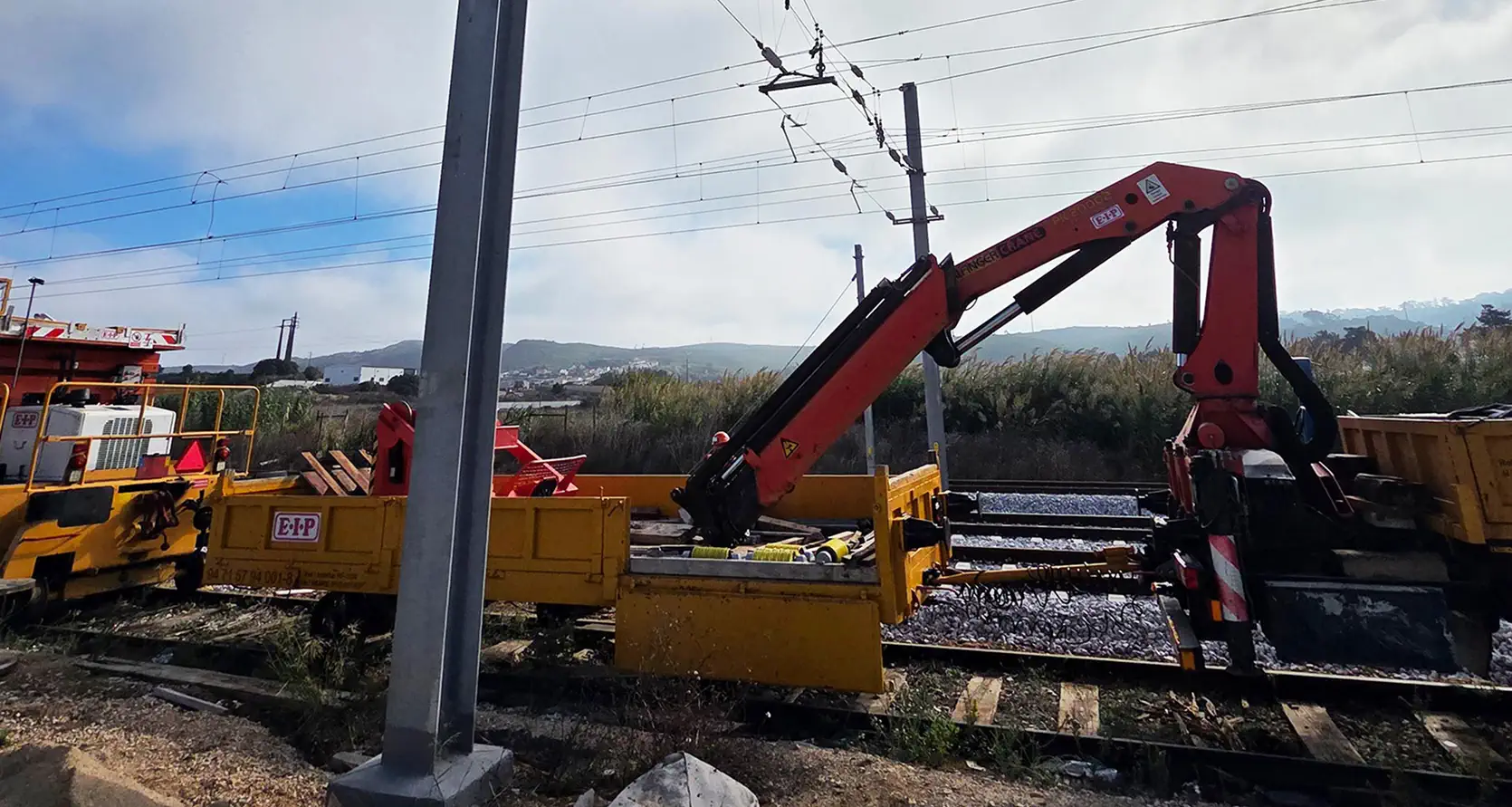
- A SENTRI unit was installed on both a support cable and contact wire
- The sensor was mounted using a standard extensible rod
- The test was conducted under safe, de-energized conditions
- Controlled vibrations were applied to simulate theft scenarios
- Data was collected via 4G and displayed on the Sentrisense platform
What it meant for the client
- Proved SENTRI's adaptability to rail environments
- Enabled early detection of disturbances without power supply
- Showed that short-term deployments are viable without heavy tooling or major disruption
- Demonstrated stable communication even in semi-remote areas
Results
Operational visibility
- Simple and fast installation process
- Consistent transmission of sensor data (motion, tilt, signal, battery)
- Real-time alerts generated from controlled disturbances
Strategic insights
- SENTRI can act as a theft detection system in rail infrastructure
- Monitoring enables earlier response and potential deterrence
- Opens the door to broader applications: fatigue monitoring, impact detection, or integration with SCADA
Technical validation
- Accurate detection of vibration above defined thresholds
- Clear differentiation between minor and significant events
- No signal loss or data sync failures during the test
- Tilt readings remained stable after installation